Academic Bio

I began my academic career researching the history of sexuality, specifically LGBTQ+ social movements in the US and Western Europe, for my undergraduate honors thesis at Mount Holyoke College. This led me to write about more contemporary LGBTQ+ movements for justice in graduate school, including California activists fighting the passage of Proposition 8, which banned same-sex marriage across the state after it had already been ruled legal and thousands of couples had married. During my Ph.D in Feminist Studies at the University of California Santa Barbara, I completed a 310-page doctoral dissertation on seemingly utopian LGBTQ+ youth cultures at women's colleges in Massachusetts, Title IX and trans rights, and the replication of racism, classism, transphobia, and femmephobia even in spaces aiming to be progressive and inclusive. 

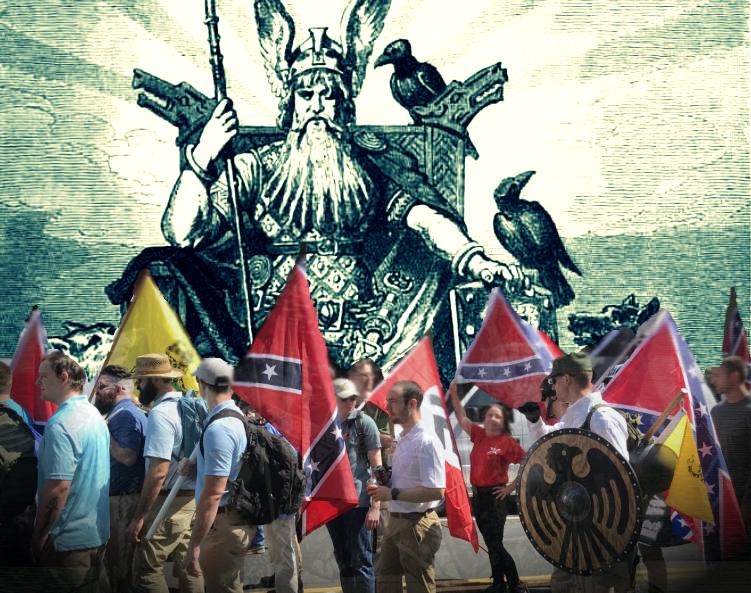
While completing my Ph.D research, I moved to Boston and taught at Brandeis University and Northeastern University in 2013, then at Tufts University from 2013-2015, and finally Wellesley College from 2015-2017. During that time I taught hundreds of students courses in gender studies, queer studies, and sociology. As I saw white supremacy, fascism, and heteropatriarchy surging in the US in the aftermath of the 2016 presidential election, I decided to leave academia in 2017 to impact spaces beyond the college classroom.

I continue to write and research on issues related to radical politics and culture, US history, and bottom-up approaches to intersectional social justice. You can find my published scholarship to date below.

My Work: How Have the Historical Reverberations of the Past Created Our Present?

As an interdisciplinary scholar, I've always been interested in the intersections between history and social institutions. All of my work, from my children's books to my scholarly articles, asks these core questions:

How do marginalized people find autonomy and freedom in societies determined to control and dehumanize them?

What can history tell us about how we got to where we are today?

Whose stories have been uplifted and whose erased? For what ends?

Which perspectives have yet to be amplified and internalized at a societal level in order for systemic change to occur?

These questions are at the heart of my current book project on radical femininity.

Think Tank Research

Academic Journal Articles

"Womanhood Does Not Reside in Documentation": Queer and Feminist Student Activism for Transgender Women's Inclusion at Women's Colleges

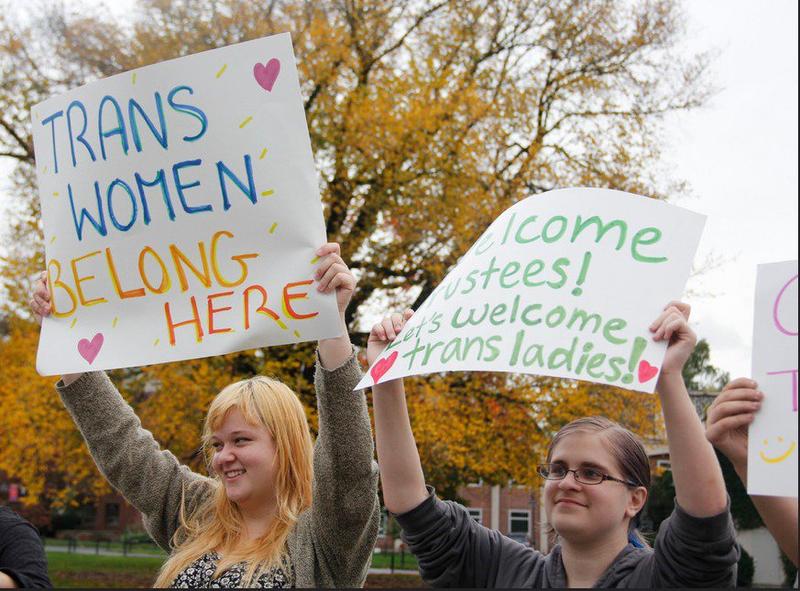
This article considers queer-driven student activism at Smith College, as well as admissions policy shifts at a number of prominent U.S. women's colleges for transgender women's inclusion. The author illustrates how student attempts to dismantle the transmisogyny at Smith as a purportedly feminist “women's” space, as well as some women's colleges' shifts in admissions policy, challenge divisions between transgender and cisgender women. This paradigmatic shift reflects the campuses as comparative havens for gender and sexual exploration, the influence of postmodern gender theory in understanding identity, and the growth of “queer” as an all-encompassing signifier for sexual and gender transgression.

Daring to Marry: Marriage Equality Activism After Proposition 8 as Challenge to the Assimilationist/Radical Binary in Queer Studies

I analyze three case studies of marriage equality activism and marriage equality–based groups after the passage of Proposition 8 in California. Evaluating the JoinTheImpact protests of 2008, the LGBTQ rights group GetEQUAL, and the group One Struggle One Fight, I argue that these groups revise queer theoretical arguments about marriage equality activism as by definition assimilationist, homonormative, and single-issue. In contrast to such claims, the cases studied here provide a snapshot of heterogeneous, intersectional, and coalition-based social justice work in which creative methods of protest, including direct action and flash mobs, are deployed in militant ways for marriage rights and beyond.

What's Wrong With Be(com)ing Queer? Biological Determinism as Discursive Queer Hegemony

This article analyzes the current dichotomy in American political and popular culture between pro-gay biological determinism, which is used to argue for LGBTQ rights, and anti-gay social constructionist ideas. This pro-gay biological determinism results in a politics of exclusion that renders queer identities falling outside a biological, lifelong model invisible. Building on Lisa Duggan’s notion of homonormativity, the author describes this discursive production as biological homonormativity, illustrated through an analysis of three key sites: an exchange between lesbian music icon Melissa Etheridge and Governor Bill Richardson during an LGBT political forum; the legal proceedings of Perry v. Schwarzenegger; and the gay cult film ‘But I’m a Cheerleader!’

Edited Collection Essays

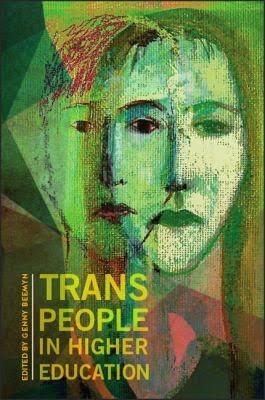
The SAGE Encyclopedia of Trans Studies - Women's Colleges

As understandings of gender have broadened and deepened beyond the rigid binary in North America in the early 21st century, women’s college students, alumnae/i, faculty and staff, administrators, and trustees have had to reevaluate their frameworks for thinking about gender. In so doing, they have had to determine what the implications are for colleges dedicated to the education of women.

Other Academic Work